Showing posts with label Banking. Show all posts

Friday, August 25, 2017

Recent AI, Big Data, Deep Learning, Machine Learning Info Digest 2017/08/25

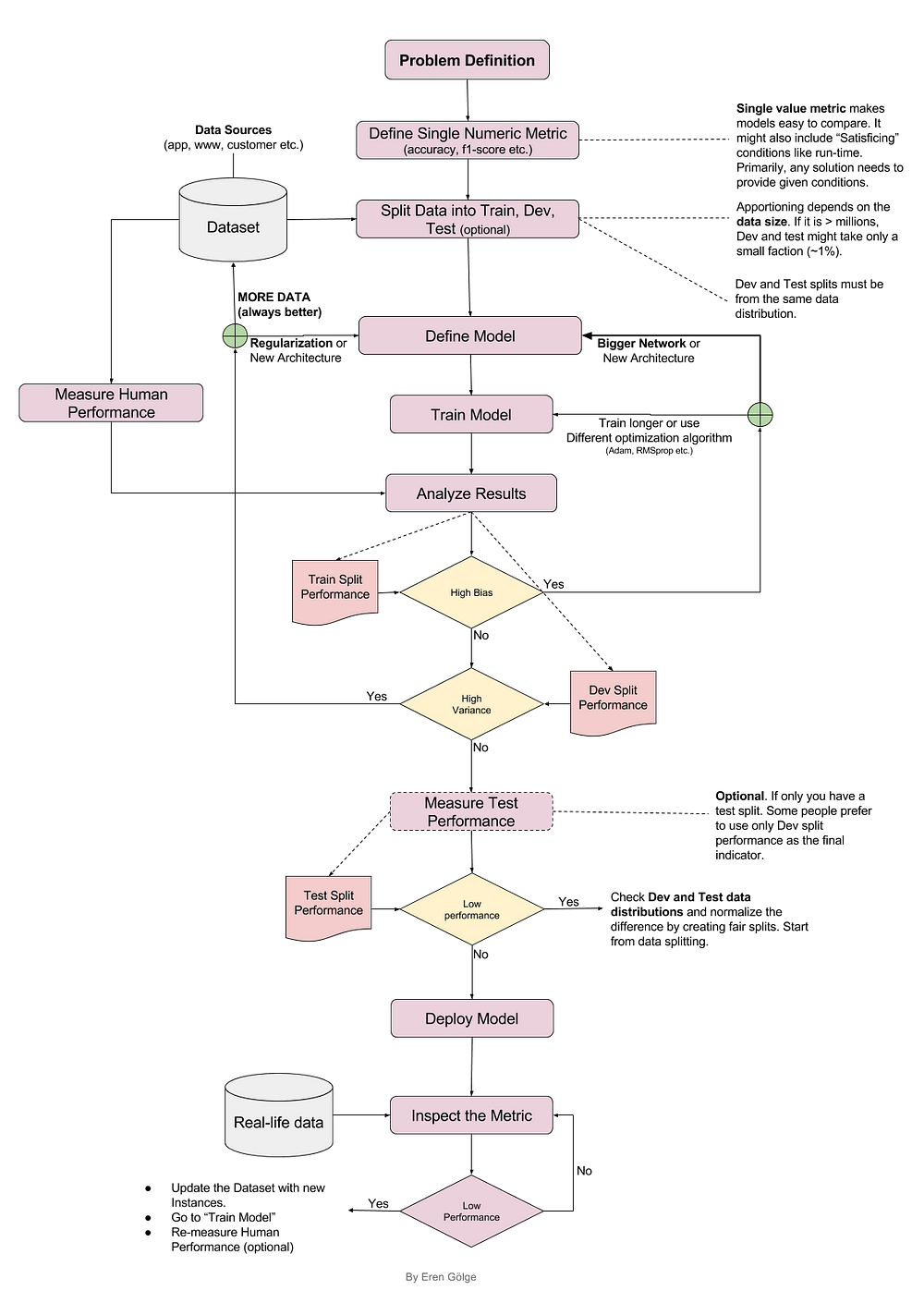
Designing a Deep Learning Project 

The Present and Future of Quantum Computing for AI
Quantum computing is still in it’s infancy, and no universal architecture for quantum computers exists right now. However, their prototypes are already here and showing promising results in cryptography, logistics, modelling and optimization tasks. For AI researchers optimization and sampling is particularly important, because it allows to train Machine Learning models much faster with higher accuracy.

Artificial intelligence could be the future of banking
By leveraging AI, banks can engage with consumers in a faster and more consistent manner. They can use “bots” at contact centres for basic inquiries to free up employees for more complicated questions. They can use robo-advisers to provide basic investment services at lower cost.

New app scans your face and tells companies whether you’re worth hiring
HireVue, a company with a “video interview intelligence platform,” wants to make that easier by using artificial intelligence to do the heavy lifting for you and screen multiple candidates at once.

Pandas tips and tricks
This post includes some useful tips for how to use Pandas for efficiently preprocessing and feature engineering from large datasets.

The Hard Thing About Machine Learning
Building systems is hard; building machine learning systems that give robust predictions is especially hard.

Aug. 2017 Hive User Group Meeting @HortonWorks
1. Hive on Spark, production experience @Uber (Xuefu Zhang)
2. Reair and its usage for Uber's multi data center replication (Zheng Shao)
3. ACID, use cases in data management (Carter Shanklin)
4. Optimized Hive replication (Anishek Agarwal)
5. LLAP: Locality is dead (in the cloud) (Gopal Vijayaraghavan)
6. Don't reengineer, reimagine: Hive buzzing with Druid's magic potion (Slim Bouguerra)

Tuesday, February 12, 2013

Big Data in Financial Service Industry

In order to get senior management's buy-in on Big Data, you will have to show them some use cases.

Let's start from the financial service industry including the banks and others.

From Oracle:

This Oracle White Paper briefly talks about Oracle Big Data technology and several use cases in the financial services industry.

Financial Services Data Management:Big Data Technology in Financial Services

From IBM:

IBM solutions for big data provides banks with an integrated and scalable set of cost-effective, high-performance tools that support the rapid ingestion of important customer data from a variety of sources and the fast analysis of large volumes of data at transactional, product or enterprise levels.

See the link from IBM website: Deriving Business Insight from Big Data in Banking

And White Paper: IBM Information Agenda for Banking - Financial Crisis and Integrated Risk Management for Financial Institutions

From IDC:

The document is not free. You will have to  pay US$1,000 to get it.

Big Data - Use Cases in Financial ServicesPrice: US $1,000

Author: Michael Versace

Insights Presentation
July, 2012  -  Doc # FIN236035
Number of Pages: 18
Abstract
Data is the currency of competition in financial service. The effective use of data and information is the foundation upon which firms compete. Services are wrapped around data to differentiate products and services. For example, knowing which customers represent the best credit revenue and profitability opportunity to a bank is a question that only data and analysis can answer.
As an extension, IDC Financial Insights believes that Big Data and business analytics can quickly deliver competitive advantage for those firms that effectively harness and leverage the trend.. In this IDC Financial Insights presentation, we describe some of the drivers behind big data with examples for how big data technologies are being applied against some demanding business imperatives in the financial markets today. The presentation concludes with Essential Questions and Guidance to practitioners.